An American’s Completely Unofficial Explanation of Japan’s Most Mysterious Holiday
Every August, something extraordinary happens in Japan.
Millions of Japanese people suddenly stop working, pack their cars, and travel back to their hometowns—all at exactly the same time.
The highways become parking lots. The bullet trains become human Tetris. Airline tickets start behaving like luxury handbags.
Why?
Because their ancestors are coming home.
Wait.
Their dead ancestors?
Yes.
So… zombies?
No! Absolutely not zombies.
Japanese ancestors are extremely polite. They do not break windows, eat brains, or appear in badly made Netflix series. They quietly return from the spirit world for a short family visit.
To help them find the way, families light small fires or lanterns.
Some people even make a horse out of a cucumber and a cow out of an eggplant.
The cucumber horse helps the ancestors arrive quickly. The eggplant cow takes them back slowly.
Basically, Obon has its own supernatural transportation system.
Spirit Uber—but with vegetables.
Then comes another mystery.
Japanese families visit the family grave and clean it carefully. But many homes also have a butsudan, a Buddhist family altar, where the ancestors are honored every day.
As an American, I have one obvious question:
Why do the ancestors need two addresses?
Is the grave their main residence and the butsudan their downtown office?
Do they commute?
Perhaps the grave is the ancestral headquarters, while the butsudan is the home Wi-Fi connection.
Nobody has explained this to me clearly, but everyone seems to know what to do.
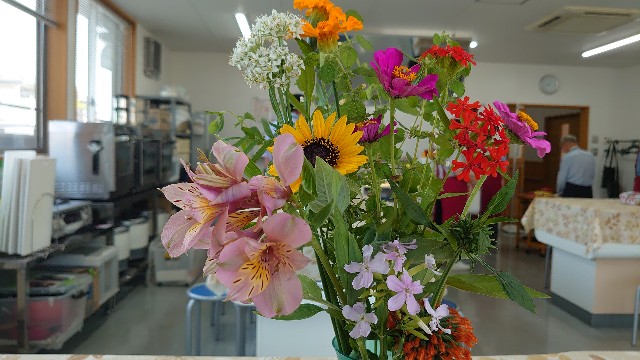
Flowers are offered. Incense is burned. Hands are joined in prayer. Families eat together, remember people who are gone, and sometimes dance in a circle at the Bon Odori festival.
And suddenly, Obon stops looking strange.
It begins to look beautiful.
It is not really a festival of death. It is a festival of connection.
For a few days, the border between the living and the dead becomes thinner. Grandparents, parents, children, and grandchildren all belong to the same family again—even if some of them can no longer be seen.
Americans often say, “Move forward.”
Obon seems to say, “Yes, move forward—but remember who walked before you.”
Of course, there is still one problem.
If the ancestors can travel freely between worlds, why do the living have to spend nine hours trapped in a traffic jam?
The spirits float peacefully home.
Their descendants are stuck on the expressway, staring at the same service-area sign for three hours.
Perhaps that is the true meaning of Obon:
The dead return from the afterlife.
The living temporarily enter hell.
And somehow, in the middle of the heat, incense, vegetables, memories, and traffic jams, everyone finds their way home.
Happy Obon. Drive safely—and if you see a cucumber horse, please give it the right of way. 🥒🐎